

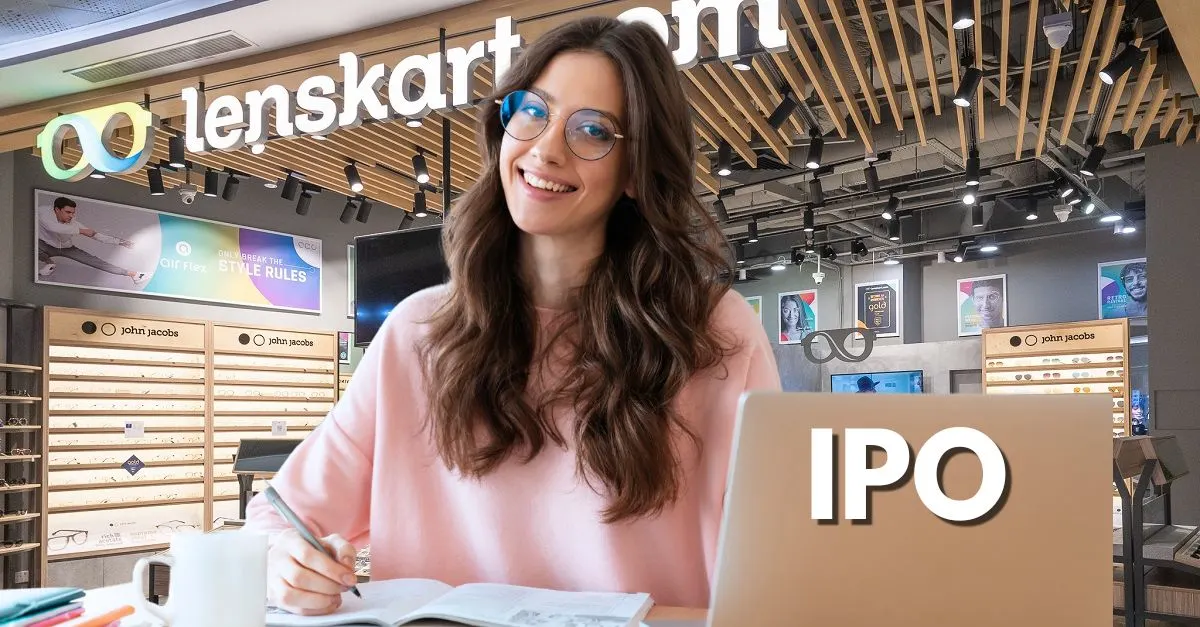
Lenskart IPO is today 31st Oct
Yes, Lenskart IPO is today 31st Oct.
India’s largest organised eyewear company, Lenskart Solutions Limited, opens its much-anticipated initial public offering (IPO) today, Friday October 31, with the subscription window running until Tuesday, November 4. The company has set a price band of ₹382 to ₹402 per equity share (face value ₹2) for the issue.
While the IPO provides an opportunity for people to own a piece of a fast-growing consumer-tech business, there is also a vocal chorus of scepticism that Lenskart may be “over-valued”. The following narrative captures the company’s pitch, performance and valuation questions.
The Pitch & Growth Story
In an internal styled “investor pitch” (imagine a business-reality TV scenario), founder-Chairman & CEO Peyush Bansal and CFO Abhishek Gupta laid out the business case: “At some point, we’ve all gone to a neighbourhood optician the experience was slow, uncertain, and honestly, kind of outdated. So we asked ourselves: why can’t buying eyewear be as seamless as ordering clothes online?”
They describe how Lenskart built a fully centralised, technology-driven supply chain: robots cutting lenses, precision polishing, stringent quality checks, and in many cities doorstep delivery within a day. They emphasise a strong omnichannel model: virtual try-ons, AI-based face / size detection, national store + home-eye-test network, so customers can browse online and finish offline (or vice-versa).
Today the company reports over 2,100 stores in India (and 2,800+ globally) and loyal paying members in the millions. Among its manufacturing footprint: major factories in Bhiwadi and Gurugram, producing millions of frames annually, and a new larger facility being built in Hyderabad. They mention international expansion in markets like Japan, Singapore, Thailand and the Gulf. The message: “We didn’t stop at manufacturing. We created India’s largest digital eyewear experience…”
As they pitched: “We are inviting India to own a piece of the country’s largest and fastest-growing eyewear brand by offering ~11 % equity for ₹7,278 crores. This capital will help us scale our technology, expand to more cities, deepen manufacturing, and take world-class eyewear from India to Asia and beyond.”
Financials & Efficiency Gains
Bansal highlighted key improvements in margins and profitability: in FY25 the company reported revenue of around ₹7,000 crores (≈ 33 % growth p.a. over the past two years) and turned profitable with a net profit of ₹297 crores. Marketing spend fell from ~7.7 % of revenue to ~6.7 % over two years. Shift from franchise-owned (FoFo) to company-owned, company-operated (CoCo) stores accelerated: with stores paying back in around 10 months. For instance, acquisition of a large franchise operator helped improve margins and control.
CFO Gupta pointed to an accounting gain of ~₹167 crores in FY25 due to revaluation of minority-stake liabilities following the acquisition of a Japanese chain, and additional ~₹8 crores favourable FX and ~₹14 crores tax credit adjustments. As clarified: “Yes… that’s more than half your total profit!” (one investor quipped). The company admitted that without those one-time accounting benefits, profit would be lower.
Valuation, Issue Structure & Risk Considerations
Several questions have been raised. When asked: “How do you justify this valuation? … This is your first profitable year since you started in 2008. Revenue growing at 20-30 %, but most of the profit this year came from accounting adjustments. And you want a ₹70,000 crore valuation, which is nearly 10 × your sales and ~230 × your earnings?!”
Analysts caution that despite its strong growth prospects, the Lenskart IPO valuation appears steep compared to other listed retail players
Bansal responded that there are no listed peer companies comparable in size. He cited competitors like Titan Eye+, GKB, Lawrence & Mayo and Vision Express, all of which he says are at least 65 % smaller in revenue in India. He emphasised building “future-tech”—smart glasses, audio eyewear, AI-powered products, referencing a partnership with Qualcomm for next-gen smart glasses. The investor panel remained unconvinced: “I like the vision, but I’m sorry, it feels too aspirational at this stage.”
Key structural numbers of the issue:
Total issue size ~₹7,278 crore (~$830 million), combining fresh issue of ₹2,150 crore and offer-for-sale (OFS) of ~₹5,128 crore.
Price band ₹382-402 per share; lot size 37 shares.
Estimated valuation (at the upper band) ~₹70,000 crore.
Grey Market Premium (GMP) had varied: reports show ~12-18% premium (or premium of ~₹48-₹64 per share over issue price).
Allocation: ~75% reserved for qualified institutional buyers (QIBs), up to 15% for non-institutional investors (NIIs) and up to 10% for retail.
Another notable point: A major chunk of the issue (~₹5,128 crore) is an OFS where existing promoters and early investors will partially exit, while only ₹2,150 crore will go into the company for growth. Some market watchers view this as a red flag: promoters satiating liquidity while relying on the public for expansion funds.
One telling quote from the founder: “There is a lot of opaqueness in the eyewear space. No pun intended. There is only 5-10 % reality, and 90 % is just showcasing and marketing…” The caveat implied: we hope this is not true for the pitch Lenskart has made to capital-market investors. But, as the valuations imply, the story is ambitious.
The Lenskart IPO reflects growing investor confidence in India’s premium eyewear segment, which is rapidly expanding due to increased digital adoption and lifestyle changes
The Big Opportunity and the Big Catch
The size of the opportunity is hard to ignore. In India, it is estimated that ~770 million people (≈53 % of the population) needed vision correction as of FY25; by 2030 that number is projected to rise to ~940 million (~6 in 10 Indians) due to increased screen time, pollution and ageing population. Yet only ~35 % of that population actually wears prescription glasses; in developed markets such as the US and Japan that number is 69-88%. That gap suggests tremendous room for growth.
Backed by SoftBank and led by Peyush Bansal, the Lenskart IPO aims to raise fresh capital to expand its technology, manufacturing, and retail footprint across India and global markets
Lenskart claims only ~4 % market share currently, so potential domestic penetration upside remains large. They aim to serve across price segments from under ₹2,000 affordable frames to ₹10,000+ premium offerings which reportedly contribute equally.
However, the catch lies in execution, margin sustainability, competition, and how much of the valuation is baked on future potential rather than current performance. The fact that a large part of the profit in FY25 came from accounting adjustments (revaluation of liabilities, FX, tax credits) raises questions about the durability of profitability as they scale. In short: the narrative is strong, the opportunity big, but valuations might already be pricing in a lot of growth.
Market analysts say the Lenskart IPO could test investor appetite for high-growth consumer-tech stories, especially given its strong brand recall and growing omnichannel presence
As the Lenskart IPO opens today, investors must weigh the strong brand, omni-channel model and large market opportunity against the stretched valuation, partial promoter exits and one-time profit elements. For those with a long-term horizon, it may be a bold growth play; for short-term listing gains, the margin of safety appears narrower.
The success of the Lenskart IPO will likely determine investor sentiment toward other upcoming new-age consumer IPOs in 2025